Best Safari Combining Gorilla Trekking and the Great Migration

Gorilla Trekking and Great Migration Safari in East Africa
March 5, 2026
How to Plan a Gorilla Trekking and Great Migration Safari
March 5, 2026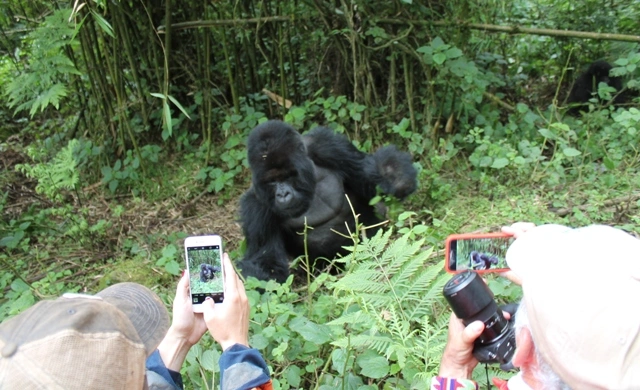
Best Safari Combining Gorilla Trekking and the Great Migration. East Africa offers some of the most remarkable wildlife experiences in the world, and one of the most exciting adventures is a safari that combines gorilla trekking and the Great Migration. This extraordinary journey takes travelers through diverse landscapes, from the misty mountain forests where endangered gorillas live to the vast savannah plains where millions of animals migrate across the Serengeti and Maasai Mara ecosystems. Experiencing both of these iconic wildlife events in a single safari provides an unforgettable exploration of Africa’s natural wonders.
Why Combine Gorilla Trekking and the Great Migration
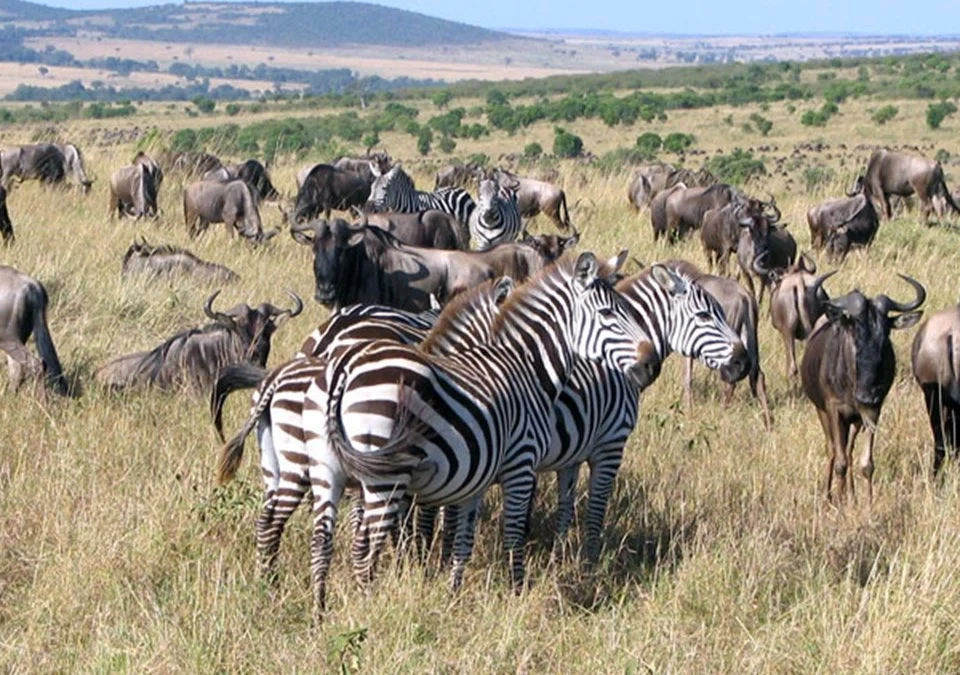
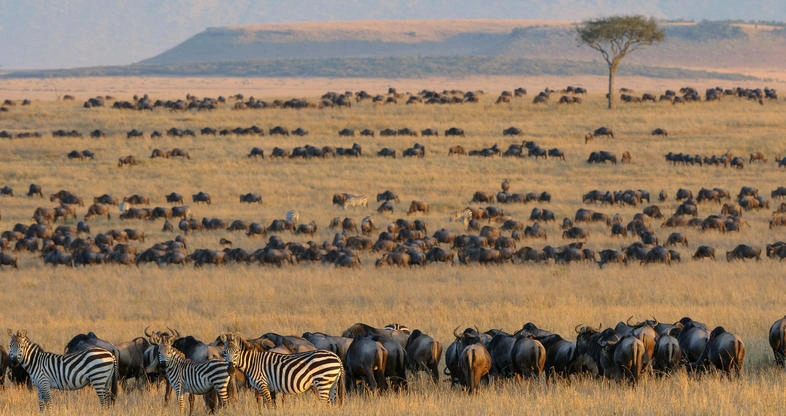
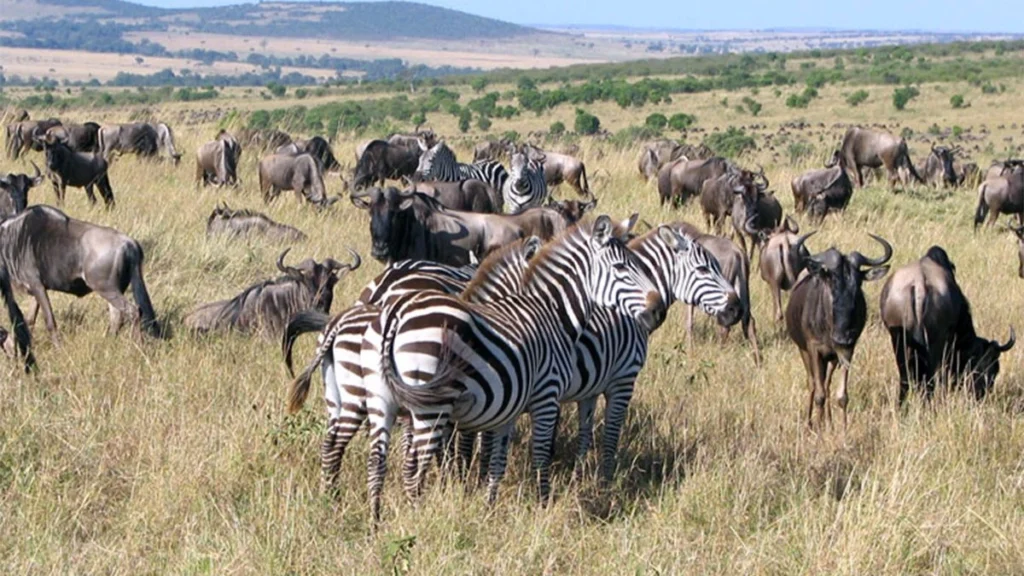
A safari that includes both gorilla trekking and the Great Migration allows travelers to witness two completely different ecosystems and wildlife experiences. Gorilla trekking takes place in dense tropical forests, where small groups of visitors hike through lush vegetation to find mountain gorillas. In contrast, the Great Migration unfolds across wide open plains where millions of wildebeest, zebras, and gazelles move across the savannah in search of fresh grazing.
This combination creates a diverse safari adventure. One day you may be trekking through the cool rainforest surrounded by birds and primates, and a few days later you may be watching thousands of wildebeest run across the plains while predators follow closely behind. These dramatic contrasts make the journey one of the most rewarding safari experiences in Africa.
Gorilla Trekking in the Mountain Forests
Gorilla trekking is often considered one of the most powerful wildlife encounters in the world. Mountain gorillas live in family groups led by a dominant silverback, and observing them in their natural habitat provides a rare insight into their behavior and social structure.
Treks usually begin early in the morning with a briefing from park rangers who explain safety guidelines and trekking procedures. Visitors are then guided through forest trails as trackers search for a habituated gorilla family. The trek can take several hours depending on the gorillas’ movements, but the moment they are found makes every step worthwhile.
Once the gorillas are located, visitors are allowed to spend up to one hour observing them. During this time, travelers can watch the gorillas feed on leaves, groom each other, care for their young, or rest peacefully in the forest. The close proximity to these magnificent animals creates an emotional and unforgettable experience.
Many gorilla trekking adventures take place in Bwindi Impenetrable National Park or Volcanoes National Park, two of the most important habitats for mountain gorillas in the world.
Experiencing the Great Migration
After exploring the forests in search of gorillas, the safari often continues to the famous savannah plains where the Great Migration takes place. This incredible natural event involves more than two million wildebeest, zebras, and gazelles traveling across the ecosystems of Serengeti National Park and Maasai Mara National Reserve.
The migration follows seasonal rainfall patterns as animals search for fresh grass and water. Along the way they face many challenges including river crossings, predators, and long distances across open plains.
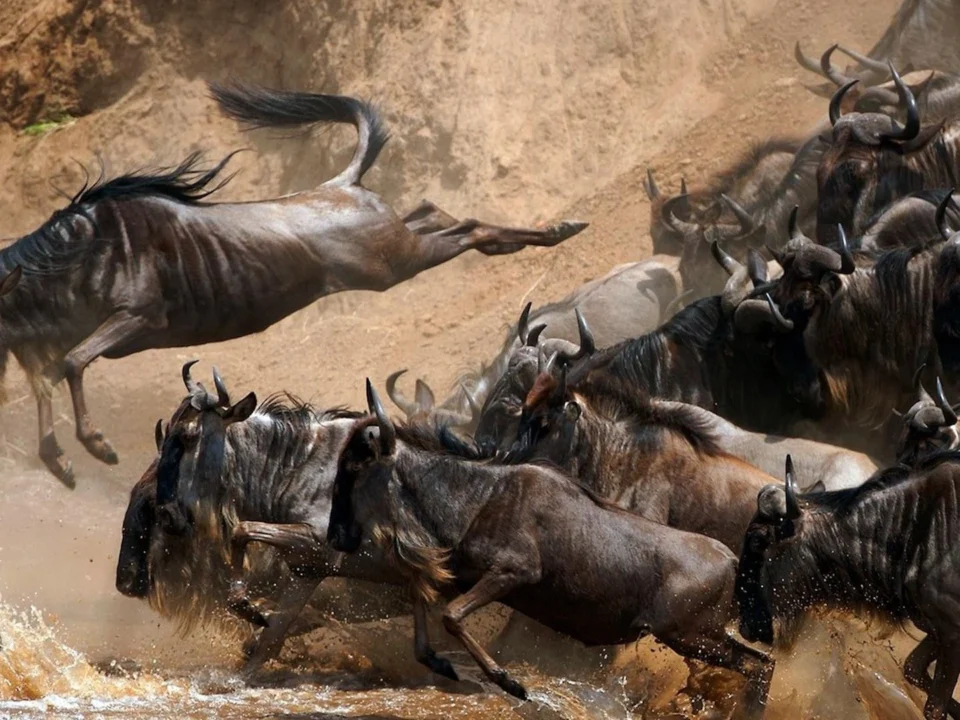
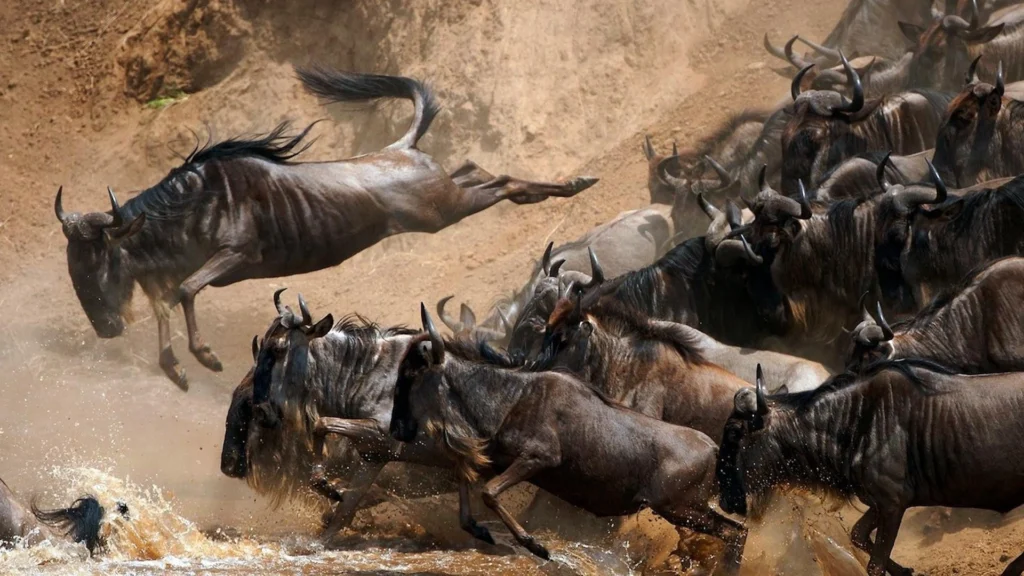
One of the most dramatic scenes during the migration occurs when wildebeest cross crocodile-filled rivers. Thousands of animals gather along the riverbanks before suddenly rushing into the water. The powerful currents, lurking crocodiles, and chaos of the crossing create an unforgettable wildlife spectacle that attracts photographers and nature lovers from around the world.
Wildlife Encounters Beyond the Main Highlights
While gorilla trekking and the Great Migration are the main attractions of this safari, travelers will also encounter a wide variety of other wildlife species along the way. The savannah regions are home to the famous Big Five animals: lions, elephants, buffaloes, leopards, and rhinoceroses. Cheetahs, hyenas, giraffes, and numerous antelope species are also commonly seen during game drives.
In the forest regions, visitors may spot chimpanzees, colobus monkeys, and many other primates living among towering trees and thick vegetation. The forests are also rich in birdlife, with colorful species filling the canopy with sounds and movement.
These additional wildlife encounters make every day of the safari exciting and unpredictable, ensuring that travelers are constantly discovering new aspects of East Africa’s biodiversity.
Stunning Landscapes Across East Africa
One of the most beautiful aspects of a safari combining gorilla trekking and the Great Migration is the diversity of landscapes. The journey often begins in mountainous regions covered with misty rainforests where towering trees and thick vines create an enchanting environment.
As the safari continues toward the savannah, the scenery changes dramatically. Vast plains stretch to the horizon, dotted with acacia trees and crossed by winding rivers. These landscapes provide perfect habitats for large wildlife herds and predators.
Sunrise and sunset in these regions are particularly breathtaking. The golden light spreading across the plains while wildlife silhouettes move in the distance creates unforgettable safari moments.
Cultural Encounters Along the Safari
East Africa is not only rich in wildlife but also in culture and tradition. Many safari routes pass through communities where visitors can learn about local lifestyles and customs.
In Kenya and Tanzania, travelers may meet the Maasai people, known for their colorful clothing, traditional dances, and strong connection to the land. These pastoral communities have lived alongside wildlife for generations and offer fascinating insights into their culture and traditions.
Near gorilla habitats, visitors may also learn about local communities that depend on forest conservation and tourism. These cultural experiences add depth to the safari and help travelers understand the relationship between people, wildlife, and the environment.
Best Time for a Combined Gorilla and Migration Safari
The best time to plan a safari combining gorilla trekking and the Great Migration depends on the migration cycle and weather conditions. Gorilla trekking is possible throughout the year, although the dry seasons are generally more comfortable for hiking through forest trails.
The Great Migration moves throughout the year between the Serengeti and Maasai Mara. One of the most popular periods is between July and October when dramatic river crossings often occur in the Maasai Mara. Earlier in the year, the southern Serengeti hosts the calving season when thousands of wildebeest give birth, attracting predators and creating intense wildlife action.
Careful timing allows travelers to experience both gorilla trekking and the migration at their most exciting moments.
Wildlife Photography Opportunities
A safari combining these two wildlife experiences offers incredible photography opportunities. In the forests, photographers can capture close portraits of gorillas with lush green backgrounds and soft natural light filtering through the canopy.
In the savannah, the migration creates powerful scenes of moving herds, predator hunts, and dramatic landscapes. The contrast between the quiet rainforest environment and the dynamic plains provides endless creative possibilities for photographers.
Early mornings and late afternoons are the best times for photography because the lighting is softer and wildlife is more active.